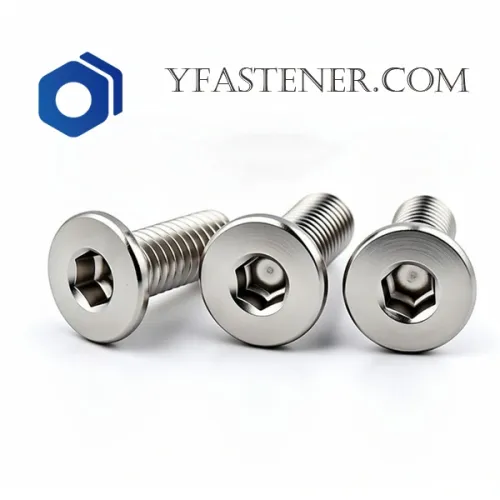
| Standard | DIN 912, ISO 4762 |
| Grade | 8.8, 10.9, 12.9 |
| Surface Treatment | ZP |
Product Introduction
Standard Name: Zinc Plated Hex Socket Head Cap Screw (Electrogalvanized Hex Socket Head Cap Screw).
Common Names: Zinc-Plated Hex Socket Screw, Electrogalvanized Cup Head Screw, Allen Bolt ZP.
Product Definition: A bolt featuring a cylindrical head with an internal hexagonal socket, requiring an Allen wrench for installation. Its surface undergoes electrogalvanized treatment. Designed for compact installation spaces, high torque resistance, and basic rust prevention, it ranks among the most widely used precision fasteners in general machinery, equipment enclosures, and product assembly.
Hex Socket Bolt ZP Key Features
Zinc Plated (ZP): Provides basic rust protection and a metallic sheen, enhances corrosion resistance,
suitable for indoor or mildly humid environments, and complies with RoHS environmental standards.
Hex Socket Drive Design: Cylindrical head with an embedded hexagonal slot, driven by an Allen key,
facilitating the application of high torque in confined spaces and preventing external damage.
Material and Strength: Commonly used carbon steel or alloy steel, high strength grade (e.g., 8.8 or 10.9),
fatigue resistant; conforms to DIN 912 and ISO 4762 standards.
Various Specifications: Diameter M2-M36, length 5mm-300mm, supports full thread or shoulder design.
Advantages: Precise installation, economical and practical, high torque efficiency, but not suitable for
extremely corrosive environments.
Working Principle
Drive Fit: The Allen key is inserted into the hexagonal slot of the head, and rotation applies torque,
aligning the thread with the nut or internal threaded hole, generating axial force.
Pre-tightening Force Generation: Torque is converted into clamping force. The zinc plating reduces
friction, improves installation efficiency, and distributes stress to prevent loosening.
Protection Mechanism: The zinc layer acts as a sacrificial anode, preferentially oxidizing in corrosive
environments to protect the substrate; the principle involves mechanical interlocking and
electrochemical reactions.
Installation Control: Precise force is applied using a torque wrench to avoid overtightening and
damaging the coating or threads.
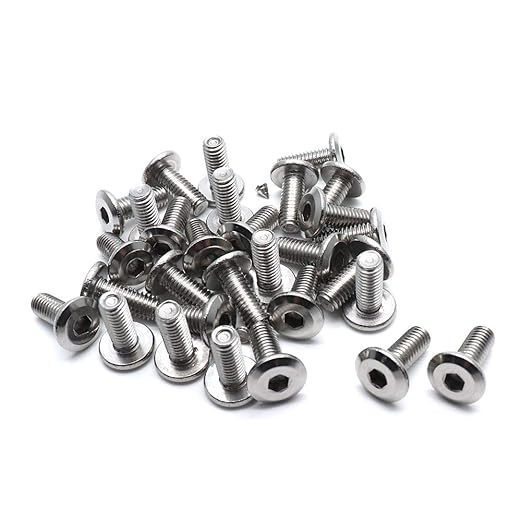
Product Applications
Machinery Manufacturing: Secures machine tool components, gears, or precision instruments. Zinc
plating provides rust protection, aesthetics, and practicality.
Automotive and Electronics: Assembles engines, circuit boards, or drones. Vibration resistant and
suitable for indoor environments.
Furniture and DIY: Assembles modern furniture or equipment. Discreet installation enhances the overall
aesthetic.
Industrial Equipment: Used for pumps, valves, motor brackets, or light production lines. Economical for
moderately corrosive conditions.
Aerospace and Medical: Connects structural components or instruments. High strength and zinc plating
ensure reliability.