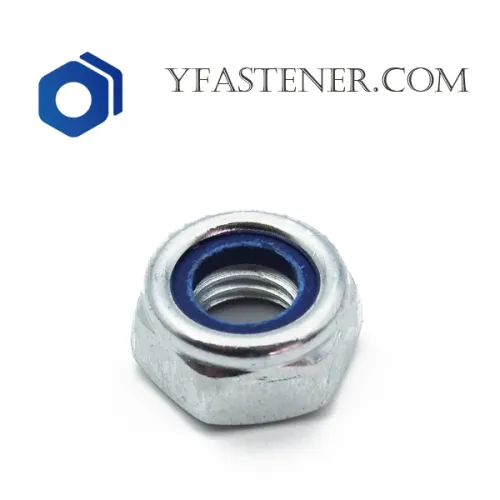
| Standard | DIN 985, ISO 7040, DIN 980, DIN 6927 |
| Grade | 8.8, 10.9, 12.9 |
| Surface Treatment | ZP, YZP, HDG,PL |
Product Introduction
Standard Name: Lock Nut or Self-Locking Nut.
Common Names: Anti-loosening nut, nylon nut, flange lock nut.
Product Definition: A type of nut that, through special mechanical structures or materials, generates additional friction or deformation locking effects after tightening. This effectively prevents spontaneous loosening of threaded connections caused by vibration, impact, or load changes. It serves as a critical safety component in vibrating applications.
Lock Nut Key Features
Anti-loosening mechanism: Common types include nylon inserts and all-metal prevailing torque,
providing continuous friction to resist vibration and loosening.
Hexagonal design: Standard hexagonal shape for easy wrench tightening; materials are mostly
carbon steel, stainless steel, or alloy steel, with zinc plating, blackening, or hot-dip galvanizing options.
Strength and durability: Strength grades such as Grade 8 or A2-70, reusable (limited to nylon types),
conforming to standards such as DIN 985 and DIN 982.
Various sizes: Diameters M4-M48, supporting various coatings and heights (standard or thin).
Advantages: Reliable anti-loosening, economical and practical, but nylon types are not heat-resistant.
Working principle
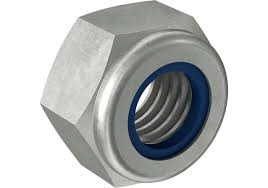
Threaded fit: The internal thread matches the bolt, and rotation generates clamping force.
Anti-loosening design: Nylon insert types tighten the bolt by deforming a plastic ring; all-metal types
increase friction through deformed threads, providing prevailing torque.
Vibration Resistance: Under load or vibration, additional friction prevents reverse rotation; the principle
involves elastic deformation and an increased coefficient of friction.
Installation Control: Initial resistance must be overcome during the first tightening to ensure
stable preload.
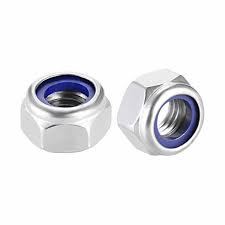
Product Applications
Machinery Manufacturing: Secure machine tools, pumps, valves, or conveying equipment to prevent
loosening.
• Automotive Industry: Assemble engines, suspensions, or chassis to resist road vibrations.
• Construction and Bridges: Steel structure connections to ensure long-term stability.
• Aerospace and Rail: All-metal type for high-vibration applications, providing safety.
• Industrial Equipment: Production lines or heavy machinery, as standard anti-loosening accessories.