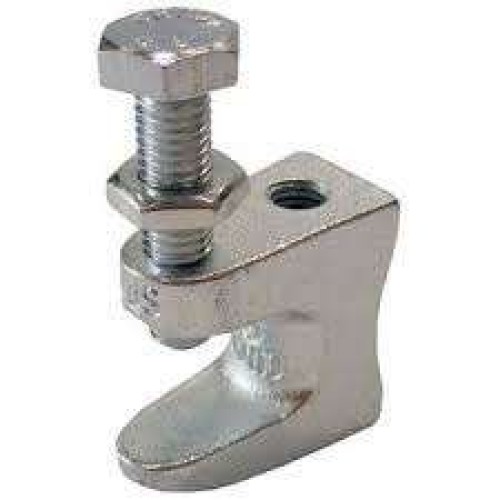
| Surface Treatment | ZP |
Product Introduction
Standard Name: G Clamp / G-Cramp.
Common Names: G-clamp, G-type clamp, C-clamp, shrimp bow clamp, woodworking clamp.
Product Definition: A manual clamping tool that generates pressure within a closed G-shaped (or C-shaped) frame by rotating a screw. Primarily used in woodworking, manufacturing, and repair operations to temporarily secure workpieces for machining, gluing, or assembly.
G Clamp Key Features
G-shaped frame: Made of cast iron or forged steel, in a G-shape (or C-shape), providing high strength
and rigidity to withstand large clamping forces without deformation.
Screw design: Adjustable screw with a T-handle at the top, and a flat pad or ball joint pad at the end,
distributing pressure evenly and preventing workpiece damage.
Material and strength: Commonly made of cast iron (economical) or forged steel (high strength), with
various throat depths and opening widths, and clamping forces ranging from hundreds to thousands
of kilograms.
Diverse specifications: Opening sizes from 2"-24" (50-600mm), throat depth from 50-300mm, often
available with quick-release or sliding arm versions.
Advantages: Stable clamping, simple operation, economical and durable, adjustable, suitable for
temporary fixing.
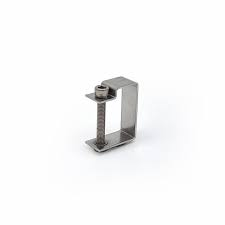
Working Principle
Placing the workpiece: Place the workpiece within the G-shaped opening, with the screw end contacting
the workpiece.
Tightening the screw: Rotate the T-handle to advance the screw, generating axial clamping force.
Pressure distribution: The pad distributes the force evenly, and the frame's rigidity resists deformation.
Fixing and releasing: Lock the clamp once the desired force is reached, and reverse to release; the
principle involves screw friction and mechanical leverage.
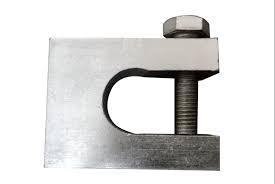
Product Applications
Woodworking and furniture: Gluing plywood, fixing workpieces to the workbench, providing stable
pressure.
Metal welding: Temporarily fixing steel parts or pipes to ensure welding alignment.
Mechanical repair: Clamping parts for drilling, cutting, or assembly.
DIY and household use: Home repairs, model making, or light-duty fixing.
Industrial production: Temporary clamping on assembly lines or mold fixing.