| Standard | DIN EN 1664, DIN 6927, ISO 7044 |
| Grade | 8.8, 10.9,12.9 |
| Surface Treatment | KP, ZP |
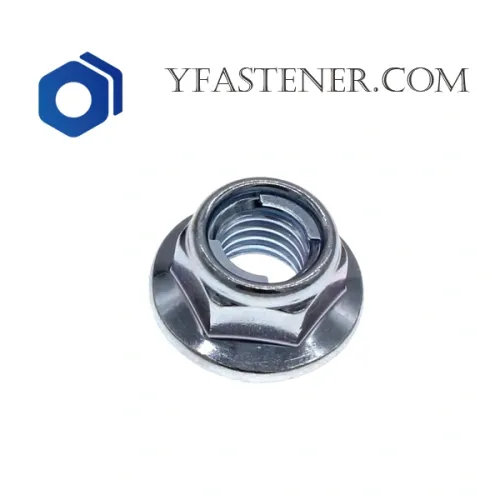
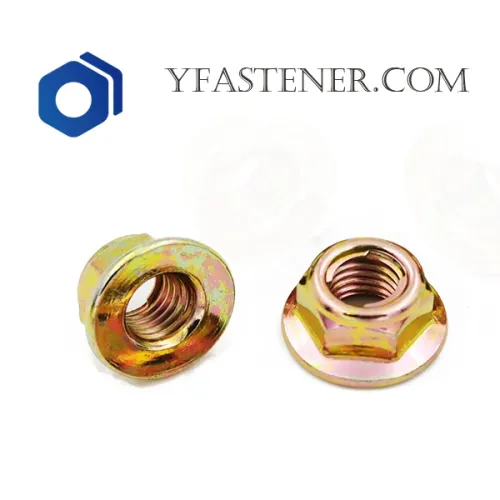
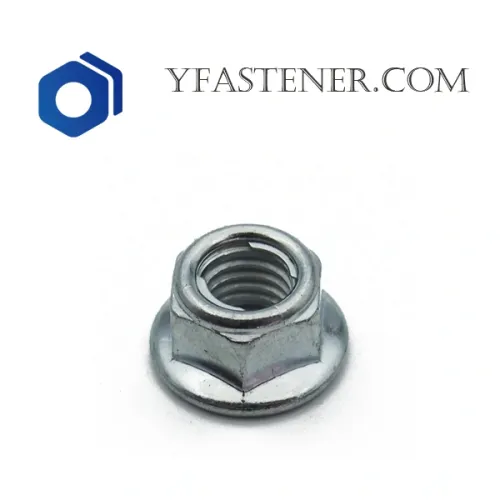
An All-Metal Prevailing Torque Lock Nut with Flange is a high-strength fastener designed to stay secure under extreme vibration, shock, and high-temperature conditions. Unlike standard Hex Flange Nut, it doesn't spin freely; it requires a wrench from the very first thread to the last.
Prevailing Torque:The "locking" comes from the nut's own internal threads, which are intentionally deformed (distorted) during manufacturing (often at the top or "crown"). This creates a permanent mechanical interference fit with the bolt.
All-Metal Construction: Because there are no plastic or nylon parts (like a Nyloc nut), it can withstand extreme heat—often up to 400°C (750°F) or higher, depending on the material.
Integrated Flange:The wide, circular base acts as a built-in washer. It distributes the clamping pressure over a larger surface area, which protects the joint and prevents the nut from "sinking" into softer materials.
These nuts are manufactured to strict international standards to ensure the locking force is consistent.
| Feature | Standard / Specification |
| Metric Standards | DIN 6927, ISO 7044, ISO 12126,EN 1664 |
| Inch Standards | IFI 100/107 (Grade C or G), B18.16.3M |
| Common Materials | Steel (Property Class 4, 8, 10, or 12) |
| Common Finishes | Zinc Plated, Zinc Flake (Geomet), Phosphate & Oil |
The following values are for Class 10 steel nuts (equivalent to Grade 8 bolts), which is the most common high-strength pairing for these fasteners. (if you have intereted in other grade, please let me know)
| Thread Size | Pitch (mm) | Socket Size (mm) | Prevailing Torque (Nm)* | Final Tightening Torque (Nm)** |
| M6 | 1.00 | 10 mm | ~1.5 Nm | 13–15 Nm |
| M8 | 1.25 | 13 mm | ~3.0 Nm | 32–35 Nm |
| M10 | 1.50 | 15 mm | ~5.5 Nm | 62–68 Nm |
| M12 | 1.75 | 18 mm | ~8.0 Nm | 110–120 Nm |
| M14 | 2.00 | 21 mm | ~12.0 Nm | 175–190 Nm |
| M16 | 2.00 | 24 mm | ~18.0 Nm | 270–290 Nm |
These values are for Grade G (High Strength) nuts, typically used with Grade 8 bolts.
| Thread Size | Pitch (mm) | Socket Size (mm) | Prevailing Torque (Nm)* | Final Tightening Torque (Nm)** |
| M6 | 1.00 | 10 mm | ~1.5 Nm | 13–15 Nm |
| M8 | 1.25 | 13 mm | ~3.0 Nm | 32–35 Nm |
| M10 | 1.50 | 15 mm | ~5.5 Nm | 62–68 Nm |
| M12 | 1.75 | 18 mm | ~8.0 Nm | 110–120 Nm |
| M14 | 2.00 | 21 mm | ~12.0 Nm | 175–190 Nm |
| M16 | 2.00 | 24 mm | ~18.0 Nm | 270–290 Nm |
Heat Resistance:While Nylon insert nuts melt at high temperatures, all-metal nuts remain effective in engine bays and exhaust systems.
No Washers Needed:The flange eliminates the need for a separate flat washer, reducing the number of parts and assembly time.
Reliability:It maintains its locking ability even if the bolt loses its initial "tension" (preload).
Automation Friendly:The conical top allows automated assembly tools to orient the nut easily.
Because of their "fail-safe" nature, you will typically find these in critical mechanical joints:
Automotive:Exhaust manifolds, suspension components, and turbochargers.
Heavy Machinery:Construction equipment and agricultural tools subject to constant vibration.
Industrial: Pump systems, conveyors, and structural steel connections.