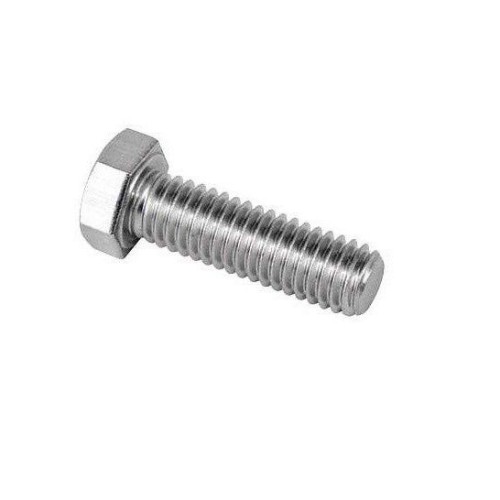
Hex Bolt SS Key Features
Stainless Steel (SS): Commonly AISI 304 or 316 grade, offering excellent corrosion resistance, oxidation
resistance, and high-temperature resistance, suitable for humid, acidic, alkaline, or salt spray
environments.
Hexagonal Head Design: Facilitates torque application using wrenches or socket tools, ensuring efficient
installation and removal.
Strength and Durability: Strength grades such as A2-70 or A4-80, capable of withstanding medium to high
loads; smooth surface, rust-proof without additional coating.
Various Sizes: Diameters M4-M36, lengths 10mm-300mm, supports full or partial threads, conforms to
standards such as DIN 931 and ISO 4014.
Advantages: Hygienic and environmentally friendly, non-magnetic, suitable for food-grade or medical
applications, but more expensive than carbon steel versions.
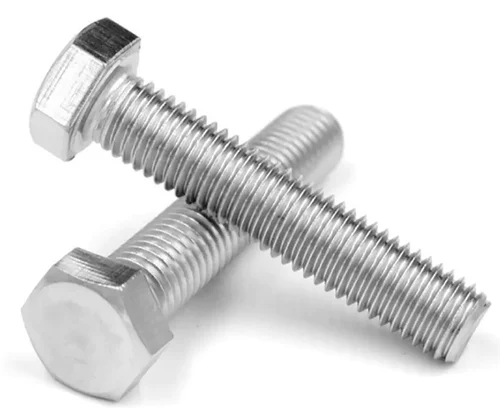
Working Principle
Threaded Fit: The external thread matches the nut or internal threaded hole, generating axial tensile
force through rotation.
Preload generation: When torque is applied, the bolt stretches, creating a clamping force that distributes
stress and prevents loosening.
Corrosion protection: The chromium content of the stainless steel forms a passive layer, resisting
chemical corrosion and ensuring long-term stability in harsh environments.
Mechanical balance: Combined with washers or locking elements, it resists vibration; the principle
involves the coefficient of friction and elastic deformation.
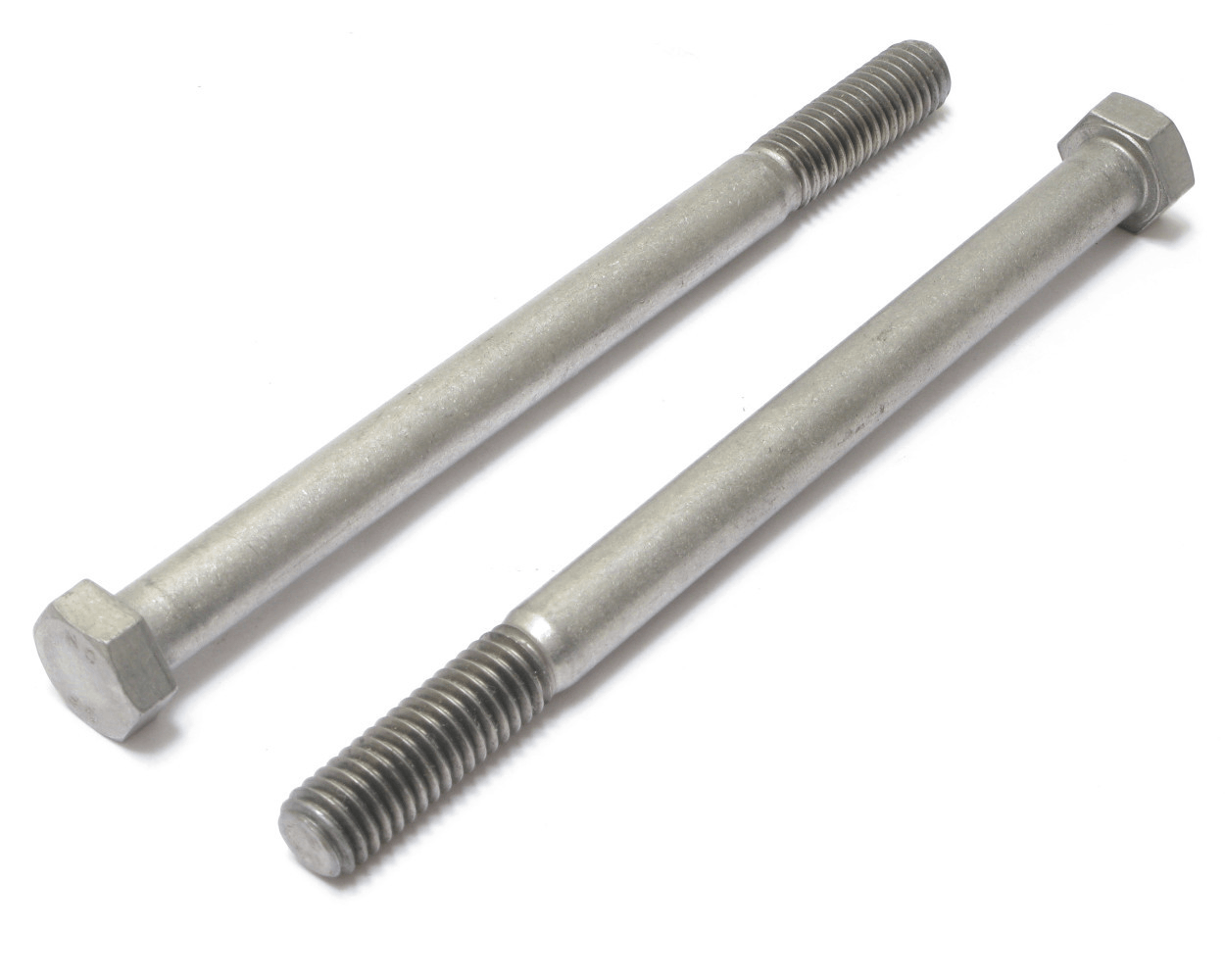
Product Application
Marine and shipbuilding: Secures hulls, decks, or equipment against seawater corrosion.
Food and pharmaceutical: Assembles processing equipment or containers, meeting hygiene standards
and preventing contamination.
Chemical industry: Connects pipes, valves, or reactors, resistant to acid and alkali environments.
Medical equipment: Secures instruments or brackets; non-magnetic to avoid interference with equipment.
Construction and outdoor: Used in bridges, building exteriors, or solar panel supports, providing
long-term stability.