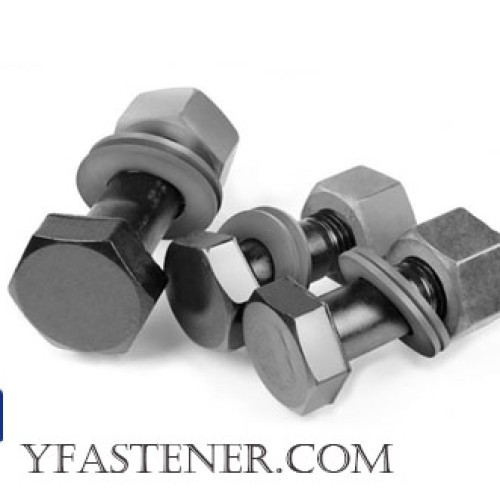
| Standard | DIN6914, ASTM A325 |
| Grade | 8.8, 10.9 |
| Surface Treatment | HDG, KP,Black |
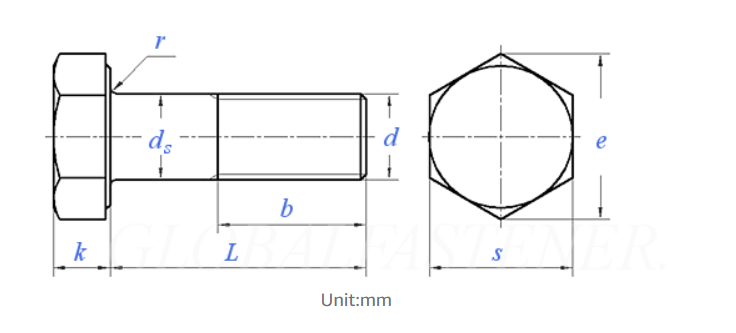
Product Introduction
Standard Name: Structural Bolt or High-Strength Structural Bolt.
Common Names: Structural Steel Bolt, High-Strength Bolt, Large Hex Head Bolt.
Product Definition: High-strength bolt assemblies specifically designed for connecting heavy-duty steel structural nodes in buildings, bridges, towers, and similar structures. Typically used with high-strength nuts and hardened washers, they transmit loads by generating friction between connecting plates through the application of substantial preload tension. This friction-type connection demands extremely stringent requirements for material quality, heat treatment, dimensional accuracy, and installation torque.
Key Features of Steel Structure Bolts
High-strength Material: Typically made of alloy steel or carbon steel, with strength grades such as 8.8,
10.9, or 12.9, capable of withstanding high tensile and shear loads, conforming to standards such as ASTM
A325/A490, DIN 6914, or GB/T 1228.
Friction Grip Design: Hexagonal bolt head for easy preload application; often paired with a flat washer
and nut to form a friction connection, enhancing anti-slip capability.
Surface Finishes: Available in HDG or black anodizing, providing excellent corrosion resistance, suitable
for outdoor environments; precision threads, with some thread designs avoiding excessive exposed length.
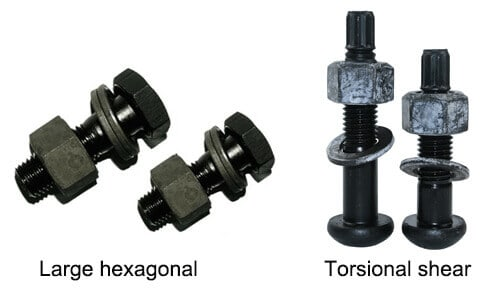
Diverse Specifications: Diameters M16-M64, lengths 50mm-500mm, supports torsion shear or standard
types, high preload.
Advantages: Fatigue resistant, vibration resistant, economical and reliable, but installation requires a
specialized torque tool to ensure accurate preload.
Working Principle
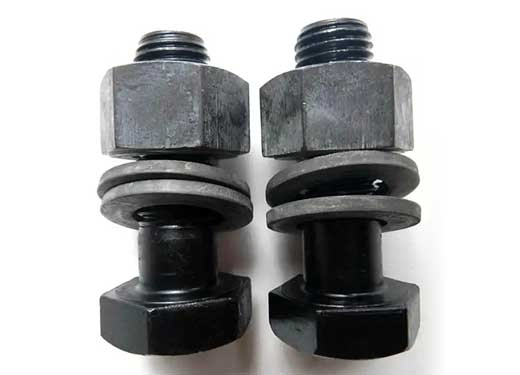
Pre-tightening Installation: Applying a specified torque using a torque wrench or hydraulic tool stretches
the bolt, generating a high clamping force that compresses the connecting plates.
Frictional Load Transfer: The pre-tightening force generates friction, transferring the load through
inter-plate friction rather than bolt shear, preventing slippage. This principle involves the coefficient of
friction (typically 0.3-0.5) and elastic deformation.
Load Distribution: Under dynamic loads, the bolts bear tension, while the washers evenly distribute
pressure. Torque-shear bolts shear off at the tail during installation, ensuring precise torque.
Anti-loosening Mechanism: High-strength materials and pre-tightening design resist vibration loosening,
complying with structural safety codes.
Product Applications
Bridges and High-Rise Buildings: Connecting steel beams, columns, or trusses, providing high-strength
fixation and withstanding wind loads and seismic forces.
Industrial Plants: Assembling steel frames, roofs, or equipment supports, ensuring structural stability.
Power and Communication Towers: Fixing tower components, resistant to outdoor corrosion and
vibration.
Wind and Solar Power: Suitable for mounting towers or supports, offering high strength to withstand
extreme weather conditions.
Marine and Machinery: Ideal for heavy-duty structural connections; stainless steel versions offer
enhanced salt spray resistance.
If you have other questions, Please send message to us or check Frequently Asked Questions