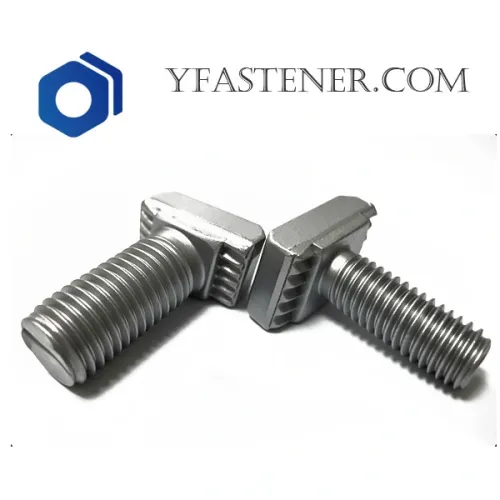
| Standard | DIN 787 |
| Grade | 8.8 |
| Surface Treatment | BO, ZP, YZP, PL |
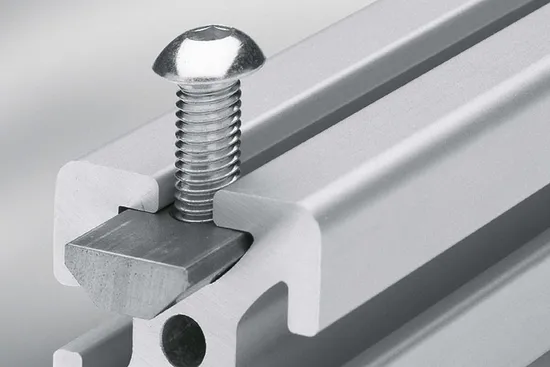
The T-Bolt, with its unique T-shaped head, snaps into the T-slot of the equipment. It allows for quick and reliable fastening and adjustment simply by screwing in the nut from above, making it a core connector in machine tool tables, fixtures, and modular aluminum profile frames.
The T-bolt (also known as a T-slot bolt, tee bolt, or hammerhead bolt) is a specialized fastener featuring a distinctive T-shaped (or hammer-shaped) head that slides into corresponding T-slots on machine tool tables, fixturing plates, or modular aluminum extrusion profiles.
Its unique head design allows it to be dropped or slid into the slot from above or the end.
Rotated to engage securely.
Preventing pull-out while permitting easy positional adjustment along the slot.
Once positioned, a nut (often a flange nut or washer) is threaded onto the protruding shank from above and tightened, creating a strong, vibration-resistant clamp. This enables rapid setup changes without disassembling the entire structure—ideal for clamping workpieces, attaching brackets, panels, or accessories.
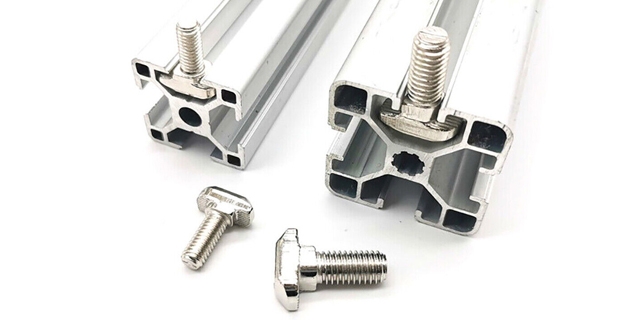
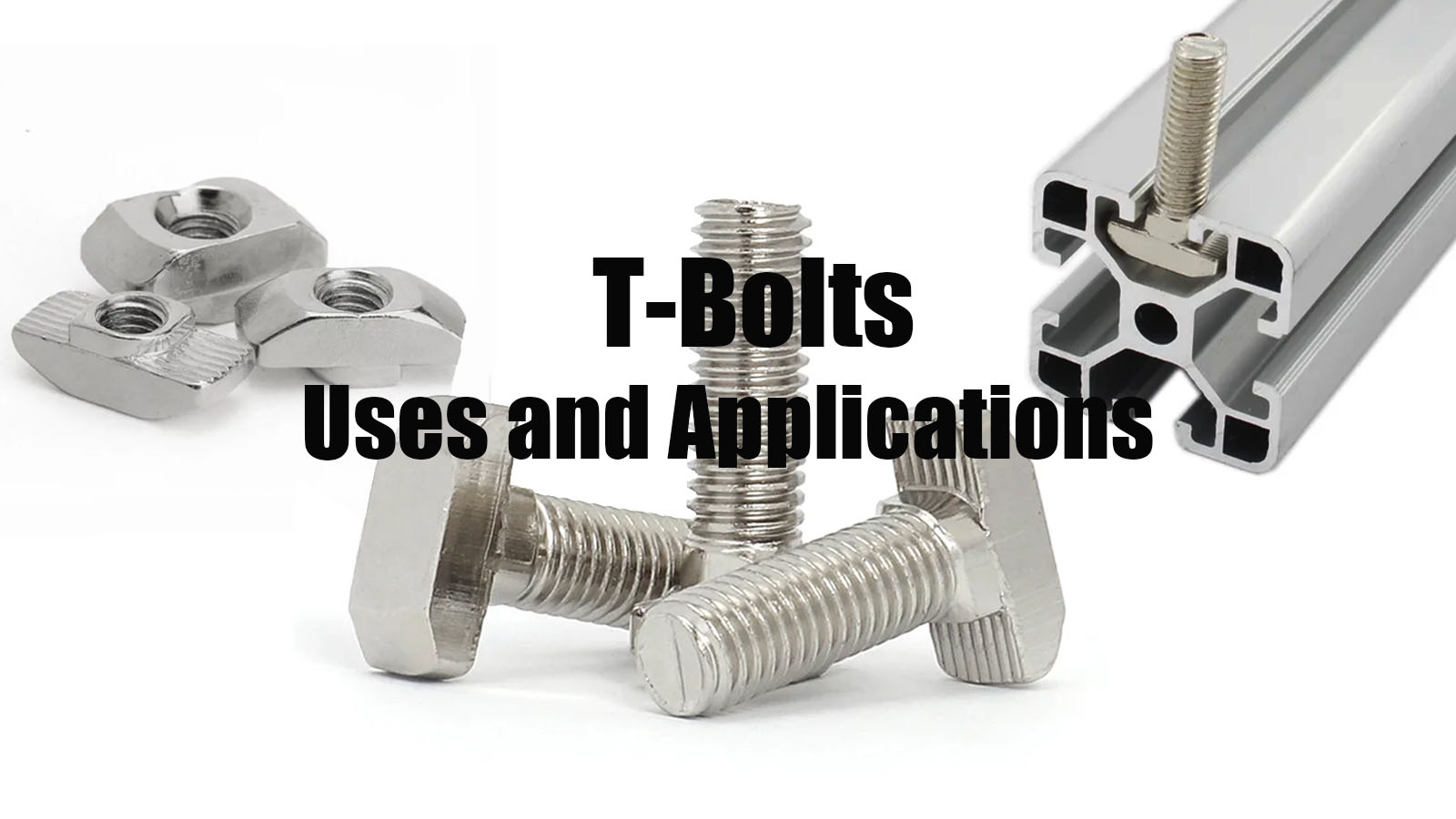
Machining and CNC setups — Securing jigs, vices, or workpieces on milling machine tables.
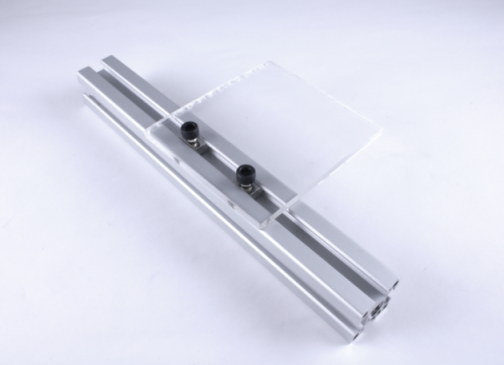
Modular framing — Building workstations, guards, conveyors, or enclosures with aluminum extrusions (e.g., 80/20 or similar systems).
Other uses include solar panel mounts, automation equipment, and heavy structural assemblies.
T-slots are the inverted T-shaped grooves machined into cast iron/steel tables or extruded into aluminum profiles.
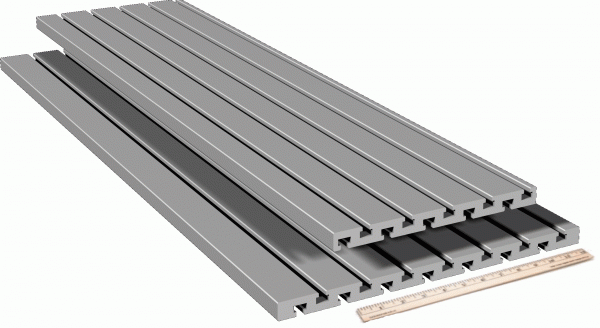
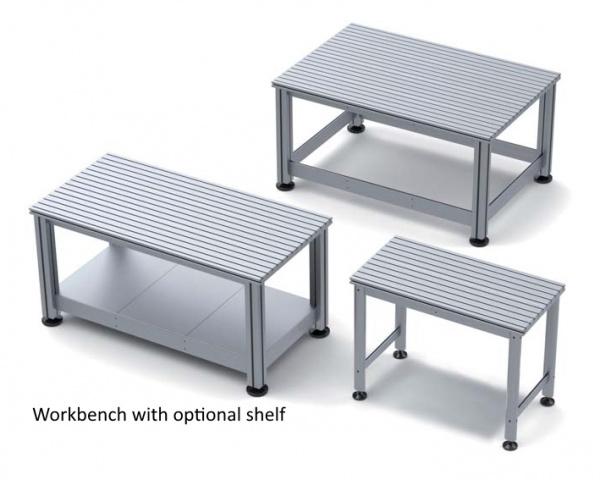
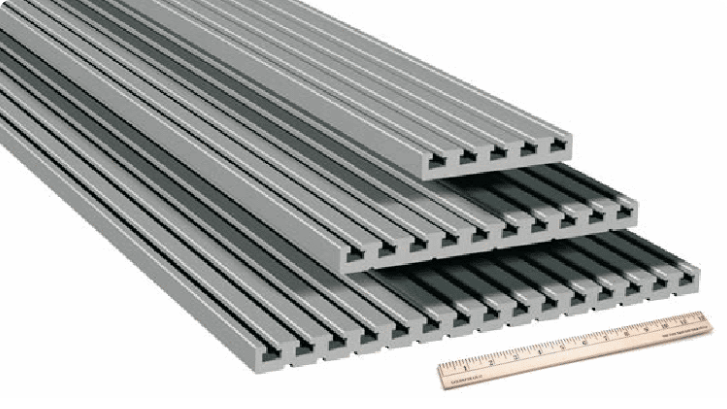
Examples of T-bolts/nuts in use (note: some show related drop-in T-nuts, which function similarly but reverse the threading).
Your description accurately captures its core advantages: quick insertion, reliable hold, and top-access tightening make it indispensable in precision engineering and modular construction.