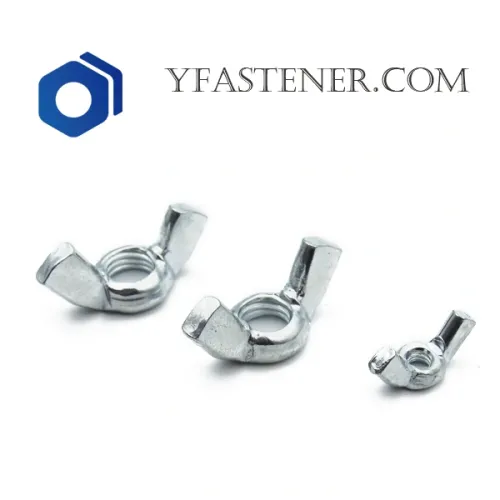
| Standard | DIN 315, ASME B18.17 |
| Grade | 4.8 |
| Surface Treatment | ZP, YZP, PL |
Product Introduction
Standard Name: Wing Nut (Butterfly Nut).
Common Names: Butterfly Nut, Wing Nut, Winged Nut.
Product Definition: A nut featuring protruding ear-shaped flanges (“wings”) on both sides. Its core design enables quick tightening or removal by hand without tools, serving as a convenient fastener for scenarios requiring frequent manual adjustment, rapid locking, or disassembly.
Wing Nut Key Features
Wing Design: Protruding "wings" on both sides allow for easy manual tightening or loosening by hand,
tool-free, suitable for frequent adjustments.
Materials and Coatings: Commonly made of carbon steel, stainless steel, or brass, with zinc plating (ZP),
natural stainless steel finish, or chrome plating, providing corrosion resistance and aesthetic appeal.
Strength and Types: Medium strength, commonly forged or stamped, conforming to standards such as
DIN 315 and ASME B18.6.9.
Various Sizes: Diameters M4-M24 (or 1/4"-1"), wing shapes include round and square wings.
Advantages: Easy to operate, quick installation, economical and practical, but limited torque,
not suitable for high-strength fixation.
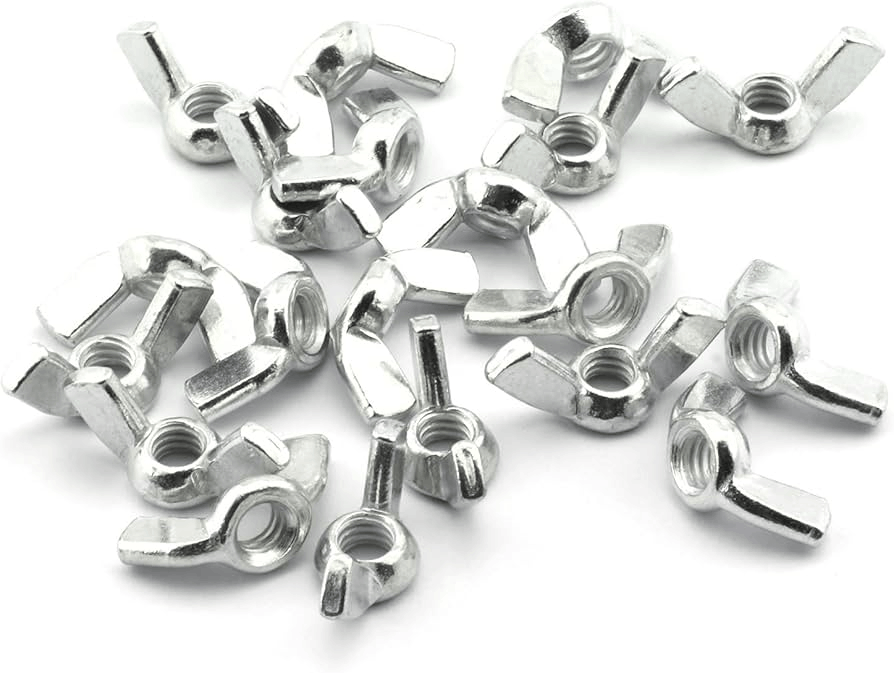
Working Principle
Threaded Fit: The internal thread matches the external thread of the bolt. Axial clamping force is
generated by rotating the wing by pinching it with your fingers.
Manual Torque: The wings amplify the leverage force, facilitating the application of sufficient preload
to secure the component.
Load Distribution: Evenly distributes tensile force; coatings (such as zinc plating) provide corrosion
protection.
Installation Control: Quick hand tightening eliminates tool requirements; the principle involves friction
and mechanical interlocking.
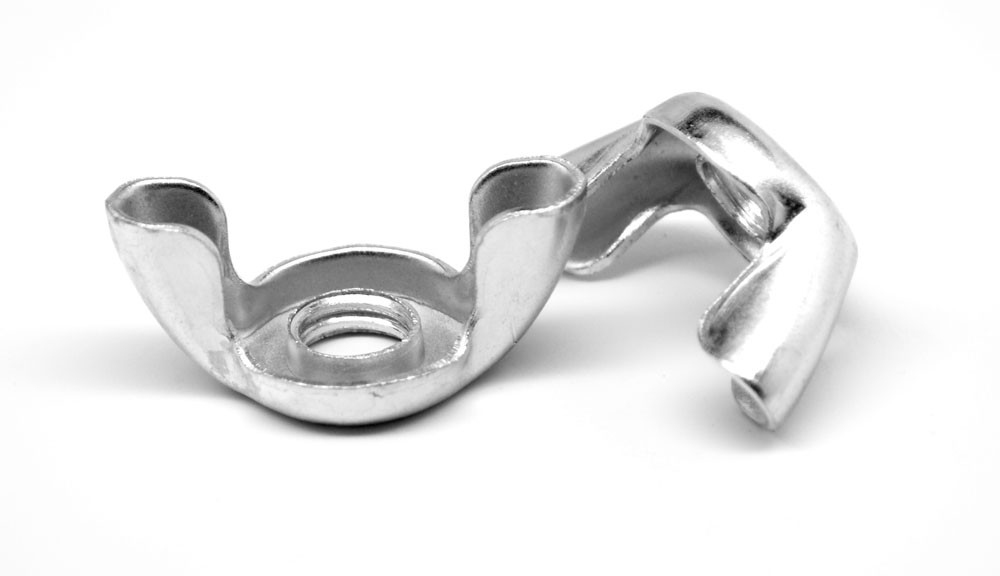
Product Applications
Machinery and Fixtures: Secure workbench clamps, molds, or supports for quick adjustments.
Furniture and DIY: Assemble detachable furniture, lighting fixtures, or trellises with easy manual
operation.
Automotive and Bicycles: Secure battery covers, wheels, or accessories for easy on-site maintenance.
Musical Instruments and Equipment: Secure drum stands, microphone stands, or photography tripods
for frequent adjustments.
Gardening and Outdoors: Install fences or sunshades; stainless steel versions are corrosion-resistant.