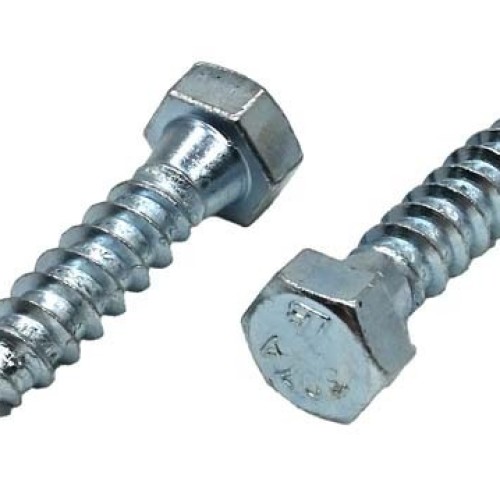
| Standard | ASME B18.2.1 |
| Grade | 8.8, 10.9 12.9 |
| Surface Treatment | HDG, ZP |
Product Introduction
Standard Name: Lag Screw or Lag Bolt.
Common Names: Hex Head Wood Screw, Square Head Wood Screw, Carriage Screw, Machine Screw.
Product Definition: A heavy-duty fastener featuring a hexagonal (or square) head and a coarse-threaded shaft. Designed for direct insertion into wood, pre-drilled concrete holes, or as an anchor bolt without requiring a nut. Its robust thread provides exceptional axial clamping force and pull-out resistance, making it ideal for joining wood-to-wood or wood-to-structural connections.
Key Features of Lag Screw
Hexagonal Head Design: The hexagonal head allows for easy application of high torque using a wrench
or socket, ensuring deep embedding during installation.
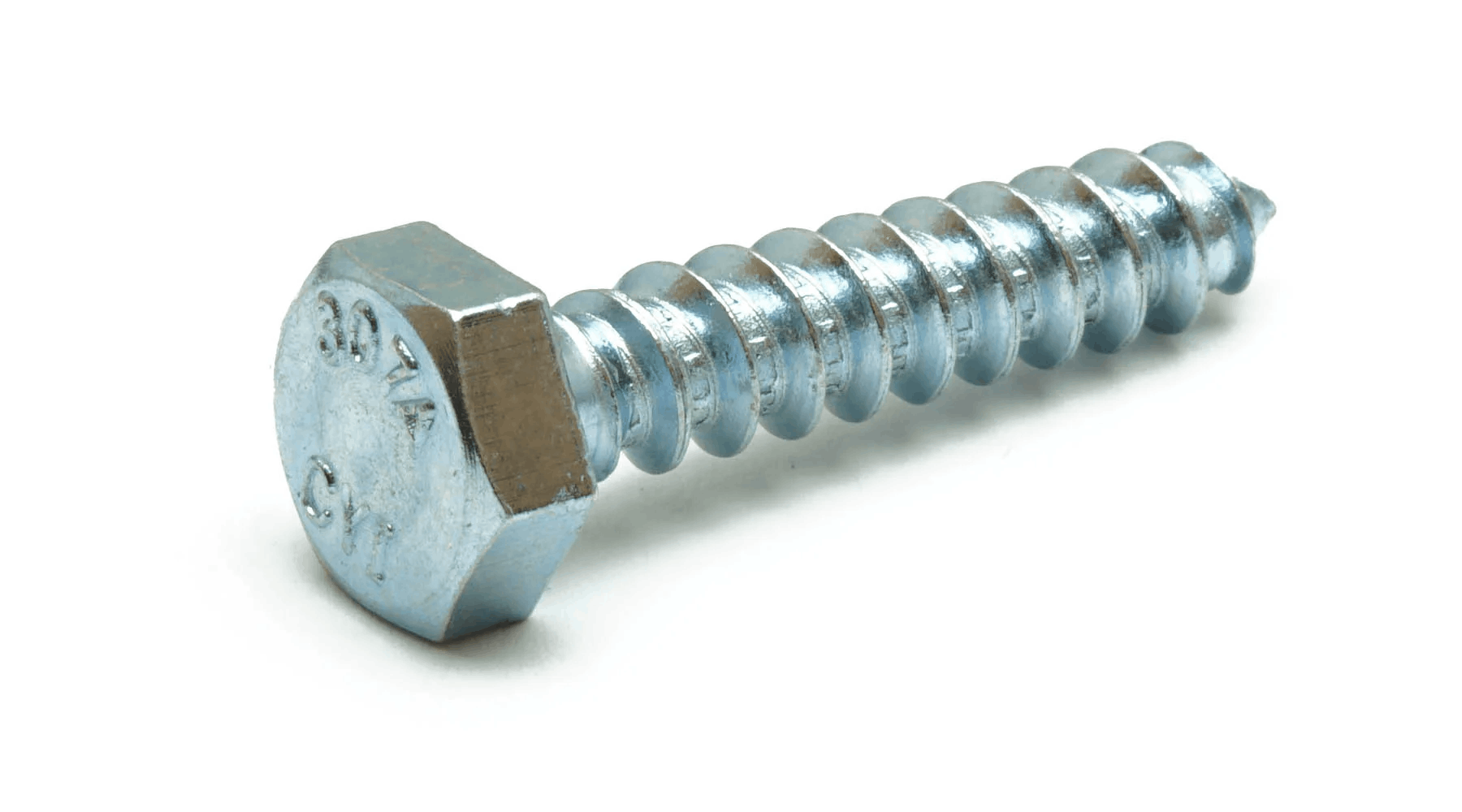
Coarse Thread Structure: The coarse, sparse threads with a sharp gimlet point self-tapping into the wood,
providing exceptional grip; the shaft is unthreaded, reducing friction.
Material and Coating: Commonly made of carbon steel, with a zinc plating (ZP) or hot-dip galvanizing
(HDG) finish for rust protection; high strength, capable of withstanding heavy loads.
Various Sizes: Diameters 1/4"-1" (M6-M24), lengths 1"-16" (25mm-400mm), conforming to
ASME B18.2.1 standards.
Advantages: Strong grip, easy installation, economical and durable, but requires pre-drilling a pilot hole
to prevent wood cracking.
Working Principle
Pre-drilling a Pilot Hole: Drilling a hole in the wood smaller than the shaft but larger than the thread to
prevent cracking.
Self-tapping Insertion: Guided by a pointed tip, the coarse thread cuts and compresses the wood fibers,
forming a strong threaded groove.
Pre-tightening Force Generation: When torque is applied, the head tightens the surface, generating a
strong axial clamping force to distribute stress.
Grip and Anti-loosening: The coarse thread deeply grips the wood, resisting pull-out and vibration;
the principle involves material compression and frictional gripping.
Product Applications
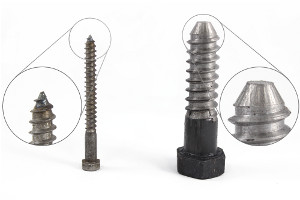
Timber Construction: Secure beams, columns, timber frames, or decks, providing structural stability.
Outdoor Projects: Install fences, gazebos, or timber bridges; galvanized versions are weather-resistant.
Furniture and Heavy Woodworking: Join thick planks or timber to concrete (expansion anchors required).
Landscaping and Gardening: Secure timber stakes or playground equipment to bear heavy loads.
DIY and Repair: Secure timber furniture structures economically and reliably.