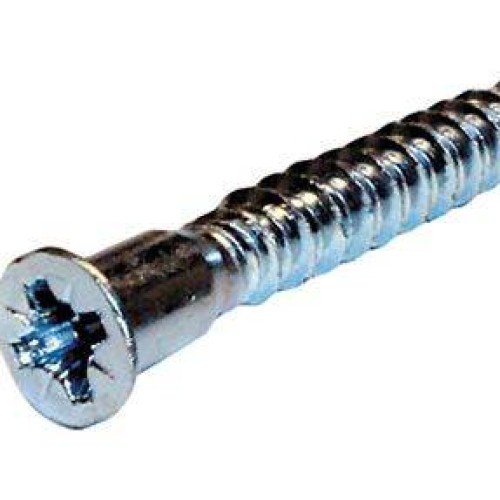
| Standard | DIN 7976 |
| Grade | 8.8, 10.9 12.9 |
| Surface Treatment | ZP, YZP, BO |
Product Introduction
Standard Name: Confirmat Screw (Three-in-One Connection Screw).
Common Chinese Names: Three-in-One Screw, Eccentric Connection Screw, Combination Screw.
Product Definition: A specialized screw designed for the “three-in-one” connection system used in panel furniture (e.g., wardrobes, cabinets). Its structural features include a drill-guiding tip, specially designed threads, an extended threadless shaft, and a cross-slotted head. It requires use with a pre-embedded nut and an eccentric wheel to form a quick, secure, and reusable hidden right-angle connection.
Confirmat Screw Key Features
Coarse Threads and Large Diameter: Sparse and deep threads, thicker shank (commonly 5-7mm),
blunt end design, suitable for the middle layer of compression-fit particleboard, providing strong grip.
Shoulder Structure: Unthreaded shoulder below the head helps with positioning and prevents board
cracking; the head is usually flat or barrel-shaped for easy countersunk installation.
Drive Type: Commonly Pozi (PZ) cross-head or internal hexagonal drive for high torque actuation.
Material and Coating: Commonly zinc-plated steel (ZP) for basic rust protection; common length
40-70mm, diameter 5-7mm.
Advantages: Can be repeatedly disassembled and reassembled dozens of times without damaging
the hole, high connection strength, economical for RTA furniture.
Working Principle
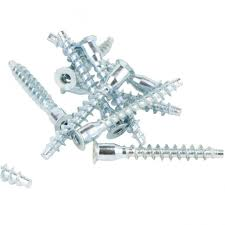
Pre-drilling Stepped Holes: Drilling holes using a special step drill bit (countersunk head + shoulder
clearing + threaded guide hole) to ensure alignment.
Compression Engagement: Upon screwing, the coarse thread compresses the particleboard material,
forming thread grooves (non-cutting), while the blunt end prevents damage to the board.
Preload Generation: The shoulder locks in place, generating axial clamping force. Stress is distributed
across the shoulder and coarse thread to prevent loosening.
Repeatability: Compression threads allow for multiple assembly and disassembly without damaging the
hole walls; the principle involves material deformation and frictional gripping.
Product Applications
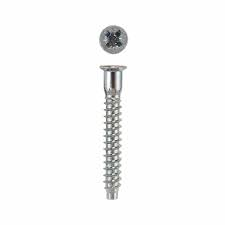
RTA Furniture: Quick-connect particleboard/MDF for flat-mounted furniture such as bookcases,
tables, chairs, or cabinets.
Cabinet Manufacturing: Vertical or edge-connecting of boards for kitchen cabinets, wardrobes,
or office furniture.
Woodworking Projects: Repairing or assembling composite board furniture, providing stable joints.
Industrial Production: Mass furniture assembly, suitable for glueless joints.
DIY Repair: Economical and reliable for connecting engineered wood products in home projects.