| Standard | ETAG 001, ICC-ES AC193 |
| Grade | A2-70 (304) , A4-80 (316) |
| Surface Treatment | ZP, PL |
Product Introduction
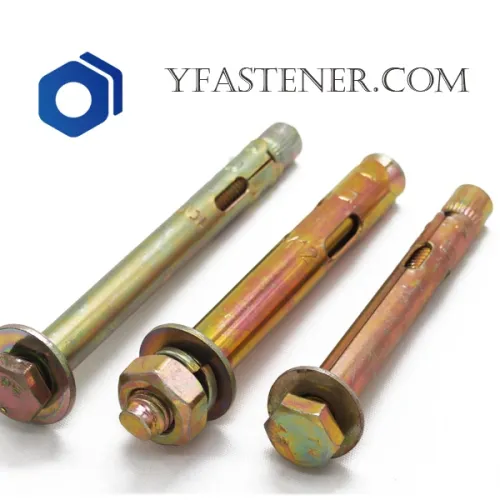
Standard Name: Sleeve Anchor Bolt.
Common Names: Sleeve Expansion Bolt, Sleeve Anchor Bolt, Expansion Screw, Dynabolt (genericized brand name).
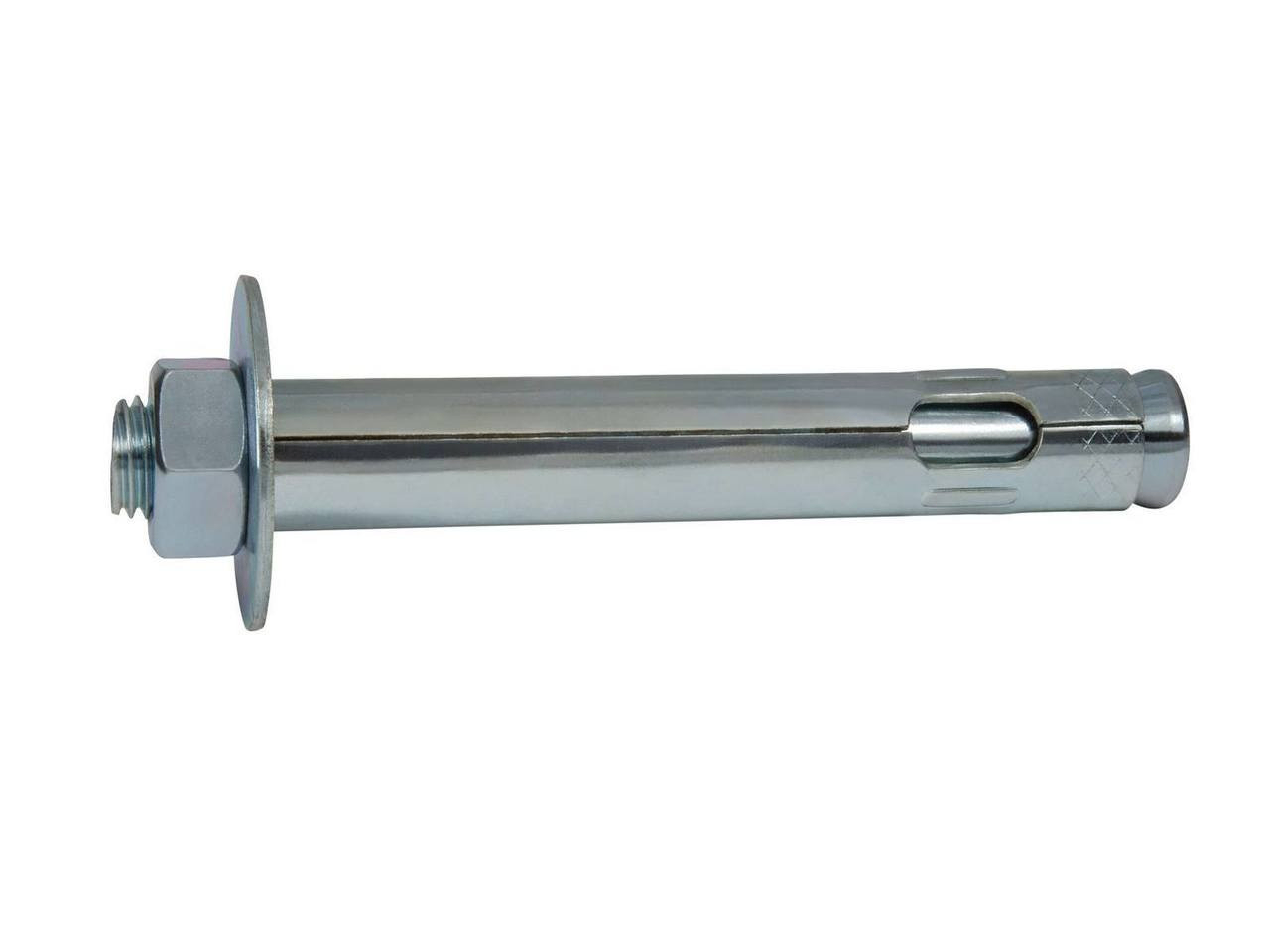
Product Definition: A common mechanical post-expansion anchor bolt consisting of a bolt, a tapered nut (expansion cone), and an external separable sleeve (expansion sleeve). During installation, tightening the nut pulls the cone into the sleeve, forcing the sleeve to expand radially. This creates significant friction and mechanical interlocking within the hole walls of substrates like concrete, achieving secure fixation.
Sleeve Anchor Bolt Type Key Features
Expansion Sleeve Design: Composed of a bolt, tapered nut, washer, and outer sleeve, the expansion
sleeve expands uniformly along its length, providing high gripping force and load capacity.
Head Type: Commonly hex head, flat head, or internal hex head, facilitating different tool actuation.
Material and Coating: Commonly carbon steel, with zinc plating (ZP), yellow zinc plating (YZP),
or hot-dip galvanizing (HDG) to provide different corrosion resistance levels.
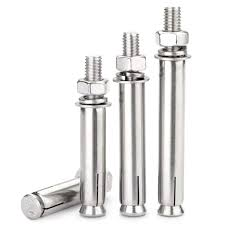
Various Sizes: Diameter M6-M24 (1/4"-3/4"), length 40-300mm, suitable for various substrates.
Advantages: Simple installation, strong grip, removable, economical and durable, suitable for
medium to heavy-duty fixing.
Working Principle
Drilling Installation: Drill a hole of matching diameter and depth in the substrate (such as concrete,
masonry), and insert the anchor bolt.
Expansion Process: When tightening the bolt, the tapered nut pulls into the sleeve, which expands
outward, gripping the hole wall tightly.
Load Distribution: Expansion force is evenly distributed along the sleeve length, providing high
pull-out and shear strength.
Securing and Removing: Generates strong clamping force, allowing bolts to be loosened and removed;
the principle involves mechanical expansion and frictional gripping.
Product Applications:
Construction Engineering: Secures steel beams, railings, or supports to concrete, providing structural
stability.
Industrial Installation: Secures heavy machinery, equipment bases, or pipes.
Residential and Commercial: Installs shelves, handrails, or signs; economical and practical.
Infrastructure: Bridge railings or outdoor fixing; galvanized version for weather resistance.
General Fixing: Any project requiring removable, high-strength anchoring.