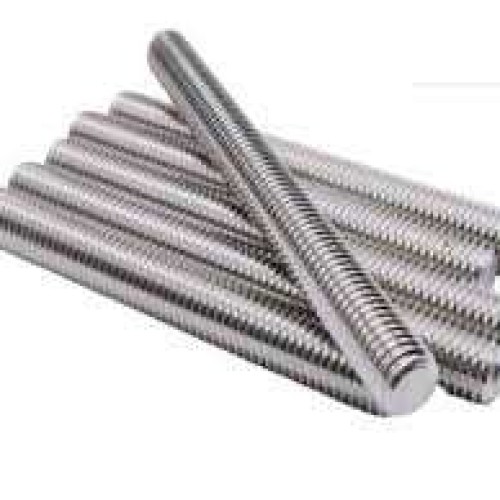
Thread Rod SS Key Features
Stainless Steel (SS): Commonly AISI 304 or 316 grade, offering excellent corrosion resistance, oxidation
resistance, and hygiene, suitable for humid, acidic, alkaline, or salt spray environments.
Fully Threaded Design: Uniform thread throughout the rod, headless, allowing for easy cutting and nut
fitting at any position, providing flexible length adjustment.
Strength and Durability: High tensile strength, fatigue resistant; natural gloss finish, no additional
coating required.
Various Sizes: Diameter M4-M48 (or 1/4"-2"), length 1m-6m (customizable), conforming to DIN 975,
ASTM A193, and other standards.
Advantages: Durable and hygienic, cuttable, flexible installation, but more expensive than carbon steel
versions.
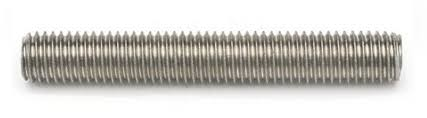
Working Principle
Cutting and Fitting: Cut to the required length, fitting nuts, washers, or connectors at both ends.
Preload Generation: When tightening the nut, the thread generates an axial clamping force, securing
the component.
Load Transfer: Evenly distributes tensile or shear forces across the entire thread; the stainless steel
passivation layer resists corrosion.
Flexible Adjustment: Can be extended or used to secure multiple components with connecting nuts;
the principle involves friction interlocking and elastic deformation.
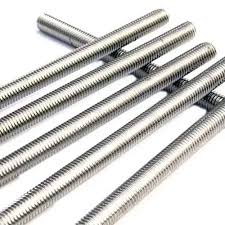
Product Applications
Building and Structures: Ceiling hangers, railing fixation, or steel structure tie rods, providing
long-term stability.
Marine and Shipbuilding: Secures equipment or pipelines, resisting seawater corrosion.
Food and Pharmaceutical: Assembles processing equipment or containers, ensuring hygiene and no
contamination.
Piping and HVAC: Hangs pipes, ducts, or supports; easy length adjustment.
Industrial Equipment: Connects heavy machinery or frames; stainless steel ensures durability.