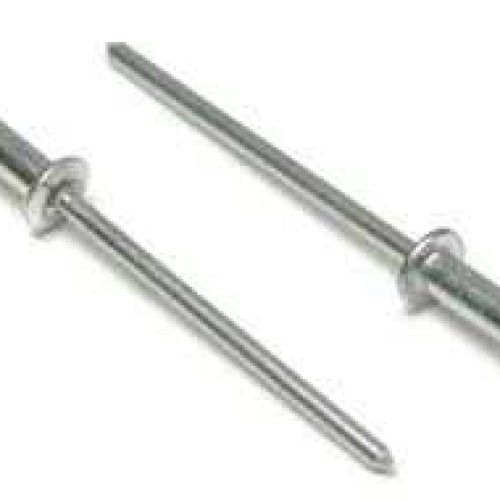
| Standard | DIN 7337, ISO 1651 |
| Surface Treatment | PL |
Product Introduction
Standard Name: Blind Rivets with Break Pull Mandrel (Aluminum Body, Steel Mandrel)
Common Names: Aluminum Pull Rivets, Aluminum Blind Rivets, Open-End Pull Rivets
Product Definition: Aluminum pull rivets are single-side forming fasteners composed of an aluminum alloy body and a steel mandrel (pull rod). Specifically designed for applications accessible from only one side, it utilizes a specialized rivet gun to pull the mandrel. This action causes the body's tail to expand and lock in place, ultimately snapping the mandrel at its predetermined break point to form a permanent, secure riveted joint.
Aluminum Blind Rivet Key Features
Aluminum Material: Both the rivet body and mandrel are made of aluminum alloy (commonly
5050 or 5052), offering lightweight, corrosion resistance, and good conductivity, suitable for outdoor
or humid environments.
Blind Rivet Design: Single-sided operation, no back support required; the mandrel breaks after
installation, and the rivet body expands to form a secure connection.
Head Types: Common types include dome head, large flange head, or countersunk head, providing
different bearing surfaces.
Diverse Specifications: Diameters from 3.2mm to 6.4mm (1/8"-1/4"), grip range 2-25mm, often available
in standard or sealed types.
Advantages: Fast, lightweight, economical, corrosion-resistant, and spark-free (suitable for flammable
environments), but lower strength than steel rivets.
Working Principle
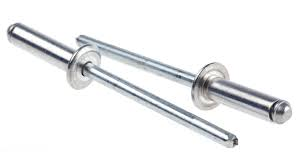
Drilling and Insertion: Drill a matching hole in the material and insert the rivet into the hole.
Riveting Process: Use a rivet gun to pull the mandrel; the mandrel head is pulled into the rivet body,
and the tail of the rivet body expands to firmly grip the back material.
Mandrel Breakage: When the set pulling force is reached, the mandrel breaks at the predetermined
breaking point, and the head remains inside the rivet body, forming a permanent connection.
Fixing Effect: The expanded part provides clamping force and pull-out resistance; the principle involves
mechanical deformation and frictional grip.
Product Applications
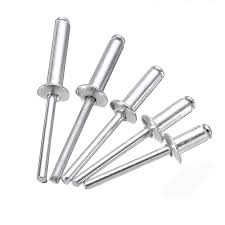
Sheet Metal Fabrication: Fixing car bodies, air conditioner casings, or appliance panels, lightweight
and corrosion-resistant.
Construction and Decoration: Installing aluminum panels, awnings, or door and window frames, suitable
for outdoor exposure.
Aerospace and Marine: Lightweight structural connections, aluminum material matching avoids
electrochemical corrosion.
Electronics and Appliances: Assembling chassis or brackets, spark-free for safety.
DIY and Repair: Quickly connecting thin metal or plastic in home projects.