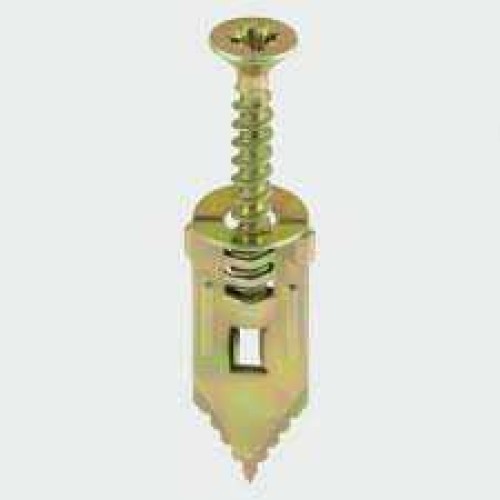
| Surface Treatment | PL,ZP |
Product Introduction
Standard Name: Hammer-in Anchor / Nail Anchor.
Common Names: Impact Anchor, Hammer-in Anchor, Nail Anchor.
Product Definition: A pre-assembled anchor system (typically comprising an anchor body with an expansion mechanism and a nail or screw serving as the striking component) that achieves installation through direct hammering without requiring additional tightening. Designed for rapid, cost-effective fastening, it is suitable for light-load applications in concrete and masonry structures.
Hammer-In Fixing Key Features
Pre-assembled design: Consists of an anchor body (usually zinc alloy or nylon) and a built-in nail/pin,
forming a single unit for easy direct hammering.
Material and Coating: Commonly made of zinc alloy (Zamac) or nylon, with a zinc plated (ZP) surface for
basic corrosion resistance, suitable for dry indoor environments.
Expansion Mechanism: The anchor body expands when the nail is hammered in, gripping the hole wall
for permanent fixing.
Diverse Specifications: Available in diameters of 3/16"-1/4" (M5-M8) and lengths of 3/4"-3" (20-75mm),
suitable for light to medium loads.
Advantages: Extremely fast installation (requires only a hammer), permanent fixing, tamper-proof, and
economical, but not removable.
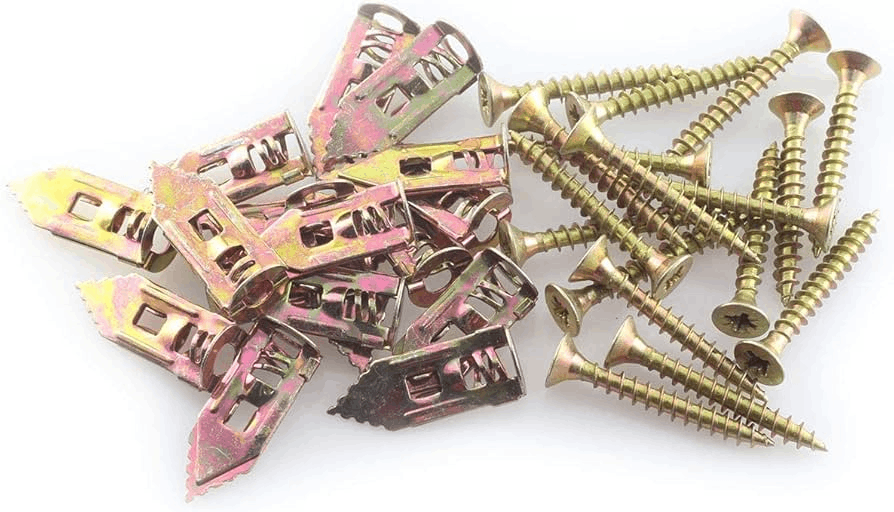
Working Principle
Drilling and Insertion: Drill a matching diameter hole in concrete, brick, or block, and insert the anchor
body.
Hammering and Expansion: Hammer the built-in nail/pin; the nail head pushes the bottom of the anchor
body to expand, gripping the hole wall.
Permanent Fixing: After expansion, a mechanical interlock is formed, providing clamping force to
prevent pull-out.
Load Distribution: The expanded part evenly distributes pressure; the principle involves mechanical
deformation and frictional grip.
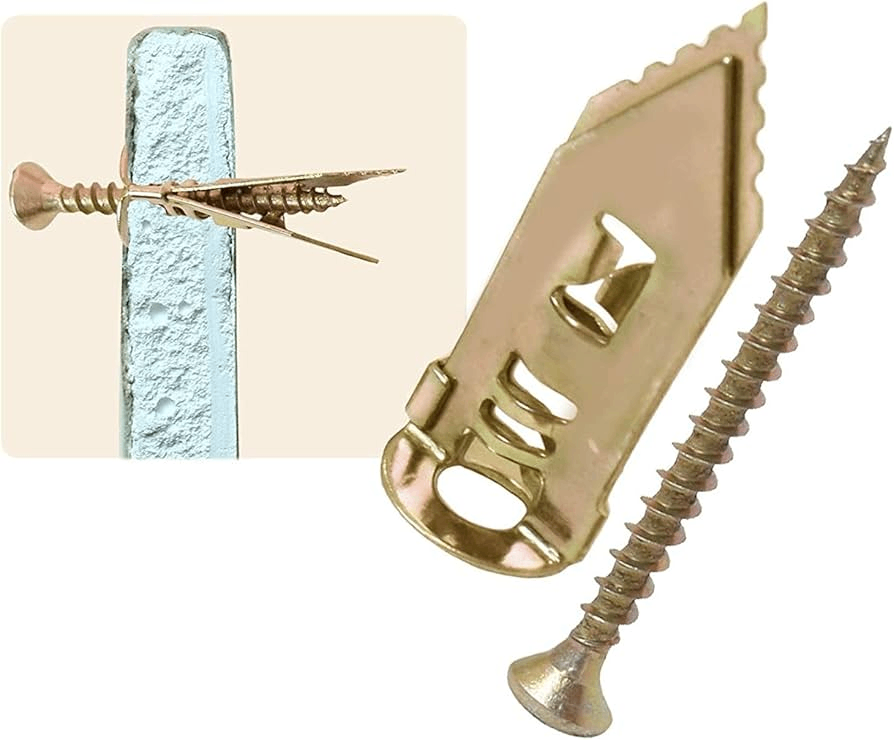
Product Applications
Building and Renovation: Fixing drywall tracks, conduit clamps, brackets, or furring strips to
concrete/brick walls.
Electrical Installation: Securing electrical boxes, light fixtures, or wire clamps quickly and reliably.
Home and Commercial Use: Installing signs, shelves, or lightweight equipment for permanent,
tamper-proof fixing.
Industrial Support: Fixing lightweight machinery components or pipe supports.
General Fixing: Any indoor project requiring quick and permanent anchoring.