| Standard | DIN 3016/ 3017 |
| Surface Treatment | ZP, PL |
Product Introduction
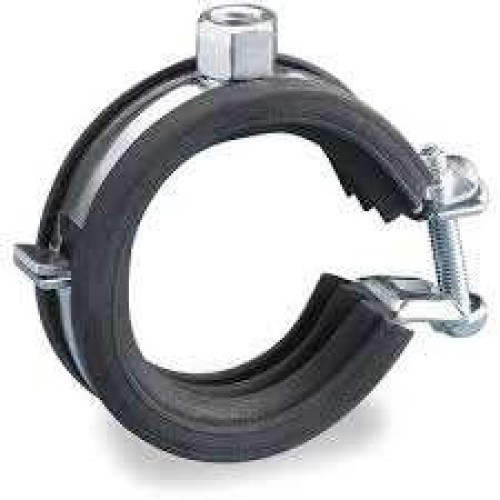
Standard Name: Pipe Clamp (with rubber inserts).
Common Names: Rubber-lined pipe clamp, shock-absorbing pipe clamp, vibration-isolating pipe clamp.
Product Definition: A pipe mounting device integrating rubber/elastomer pads within a metal clamp. It securely fastens pipes to supports while its rubber inserts effectively absorb pipe vibration, displacement, and noise. This prevents wear and isolates vibration transmission, making it a critical vibration-damping component in HVAC, plumbing, and industrial piping systems.
Pipe Clamp with Rubber Key Features
Rubber Lining: Built-in EPDM or NBR rubber lining provides shock absorption, sound insulation, and
corrosion protection, preventing vibration transmission and wear caused by direct metal-to-metal contact.
Material and Coating: The clamp body is commonly made of carbon steel with zinc plating (ZP), hot-dip
galvanized (HDG), or stainless steel (SS). The rubber is oil-resistant, ozone-resistant, and
temperature-resistant (-20°C to +110°C).
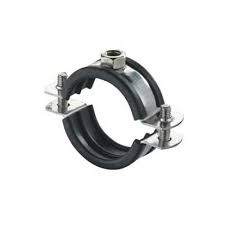
Structural Design: Typically a double-bolt or single-bolt clamp with a base plate or nut, providing uniform
and adjustable clamping force.
Diverse Specifications: Diameters from DN15-DN300 (1/2"-12"), widths from 20-50mm, supporting wall
mounting, beam clamping, or suspension installation.
Advantages: Vibration reduction, noise reduction, pipe protection, quick installation, economical and
durable, suitable for vibrating environments.
Working Principle
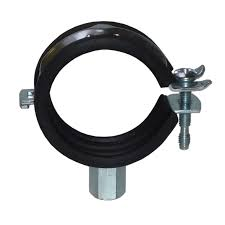
Circumferential Installation: The clamp surrounds the pipe, with the rubber lining in direct contact with
the pipe surface.
Bolt Tightening: When the nut is tightened, a radial clamping force is generated, and the rubber
compresses to cushion vibrations.
Vibration and Sound Insulation: The rubber absorbs vibration energy, preventing transmission to the
structure; it also protects against pipe corrosion and wear.
Load Distribution: The clamping surface evenly distributes pressure, resisting lateral forces and thermal
expansion and contraction; the principle involves elastic cushioning and frictional gripping.
Product Applications
Construction Engineering: Fixing water pipes, HVAC pipes, or fire protection pipes to walls/beams to
reduce vibration and noise.
HVAC Systems: Installing air conditioning ducts or hot and cold water pipes, with rubber damping to
improve comfort.
Industrial Piping: Securing pump stations, compressors, or factory pipelines to resist mechanical
vibrations.
Marine and Automotive: Fixing pipelines; stainless steel versions offer corrosion resistance and vibration
damping.
General Support: Any pipe installation project requiring vibration and sound insulation.