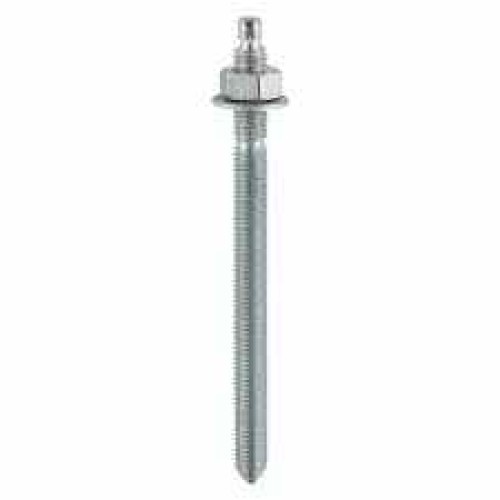
| Standard | JB /ZQ 4757 - 2006 |
| Grade | A2-70 (304) , A4-80 (316) |
| Surface Treatment | PL |
Product Introduction
Standard Name: Chemical Anchor / Chemical Dowel.
Common Names: Chemical Anchor Bolt, Post-Installed Chemical Anchor Bolt, Chemical Anchoring Bolt.
Product Definition: A novel fastening material that utilizes a specialized chemical adhesive (typically based on vinyl ester or epoxy resin) to bond and secure metal rods within drilled holes in substrates like concrete, achieving high-strength anchoring. It operates through chemical bonding forces, imposing no expansion stress on the substrate.
Key Features of Chemical Anchor
Chemical Bonding Mechanism: Utilizes epoxy, polyester, or vinyl ester resins (capsule or injection
molding), forming strong chemical bonds after curing, providing superior holding power and load
distribution compared to mechanical anchors.
Diverse Types: Capsule type (glass/resin capsule, rotary crushing and mixing) and injection molding type
(cartridge with nozzle, two-component mixing), suitable for various substrates and loads.
Material and Strength: Screws are commonly made of zinc-plated carbon steel (ZP), stainless steel (SS),
or high-strength steel. The resin offers excellent chemical corrosion resistance and shock resistance.
Diverse Specifications: Screw diameters from M8 to M30, lengths from 50 to 300 mm, suitable for concrete,
masonry, and even cracked substrates.
Advantages: High load capacity, vibration resistance, suitable for damp hole or overhead mounting,
uniform stress distribution, but curing takes time (minutes to hours).
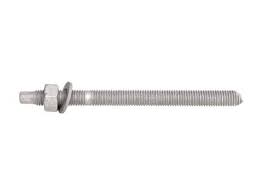
Working Principle
Drilling and Cleaning: Drill holes in the substrate and remove dust (a critical step to ensure adhesion).
Resin Injection: For capsule-type resins, insert the capsule and rotate the screw to crush and mix; for
injection-type resins, use a gun to inject the two-component resin.
Screw Insertion: Rotate the screw to mix the resin and fill pores.
Curing and Fixing: The resin chemically reacts and hardens, forming strong bonds that distribute the load;
the principle involves polymerization and chemical/friction holding.
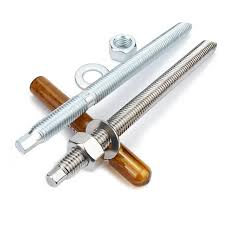
Product Applications
Structural Engineering: Fixing steel beams, railings, or curtain walls to concrete, providing
seismic-resistant, high-strength connections.
Heavy-Duty Installations: Secure machinery bases, elevator rails, or bridge components.
Repair and Reinforcement: Anchoring cracked concrete or masonry; suitable for damp environments.
Overhead and Hanging: Fixing hangers, pipes, or light fixtures to ceilings.
Infrastructure: Tunnels, bridges, or marine structures; stainless steel versions are corrosion-resistant.